Blog


Patient experience has become one of healthcare’s most urgent strategic priorities. It shapes loyalty, reimbursement, growth, and competitive positioning, and health system leaders increasingly recognize that experience cannot be separated from data quality. A recent report published by Becker’s Healthcare in collaboration with Verato examines how leading health systems are improving patient experience by addressing a fundamental challenge: …

In today’s digital economy, identity has become the foundation for every interaction. Whether connecting patients to care, members to benefits, or customers to personalized experiences, organizations can’t meet modern expectations without knowing precisely who each individual is. Yet too often, identity data remains fragmented, inconsistent, and trapped in silos — limiting the potential for innovation and growth. The identity challenge The …
Can you tell us a bit about yourself and what you do at Verato? Sure, I’m a 51-year-old Midwest guy. I grew up outside of Chicago and am originally from Detroit, a serial entrepreneur working for startups. I’ve had the benefit of working for three really successful startups, including Verato. I started my career as a consultant and applications developer. I …

Public sector organizations are under more pressure than ever to deliver fast, digital-first services that match the ease and personalization people experience everywhere else — from online shopping to mobile banking. But while expectations have evolved, most agencies are still operating on fragmented, outdated systems that can’t keep up. The result is a growing identity …

Tell us a bit about yourself and your journey with Verato. I’ve been at Verato for ten years now — ten years and one month, but who’s counting? I started here in a marketing role. When I joined, we had some government business but no commercial customers. I came right after Series A funding, along …
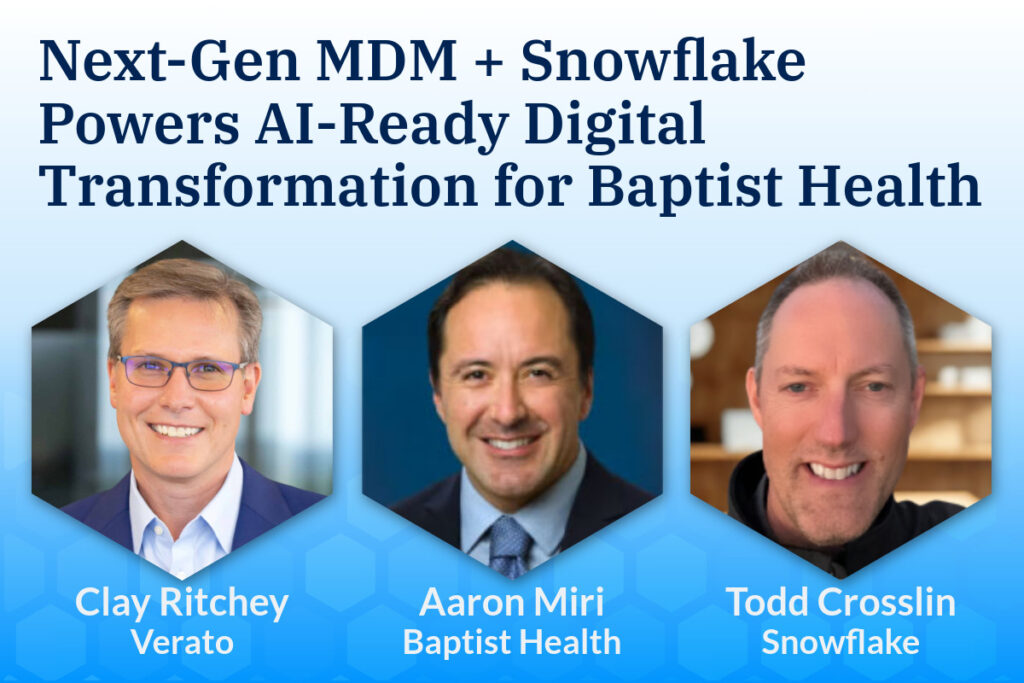
At this year’s Gartner IT Symposium/Xpo™, Verato CEO Clay Ritchey sat down with Aaron Miri, EVP and Chief Digital & Information Officer of Baptist Health, and Todd Crosslin, Global Industry Principal for Healthcare and Life Sciences at Snowflake, for a packed final-day session on one of the most pressing challenges in modern enterprises: how to …
By Joe Hickey, VP of Provider Markets, Verato When identity steps into the spotlight When Verato’s message lit up Times Square, it was a moment of real pride, not just for our team but for what it represents. Seeing our name up there wasn’t about a promotion; it was a reflection of how far the …
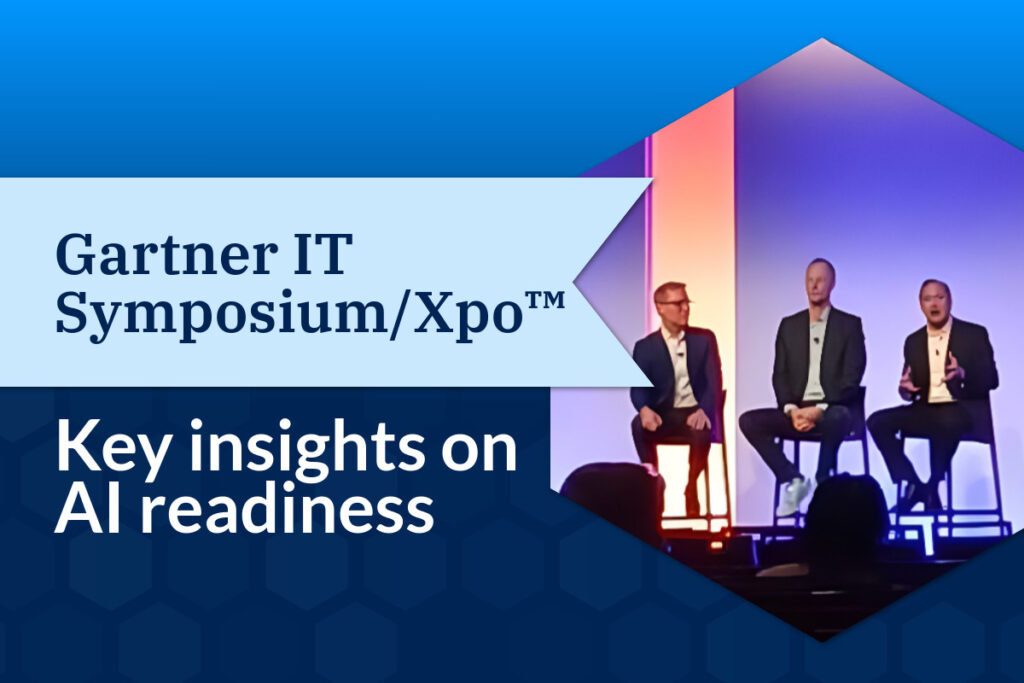
At this year’s Gartner IT Symposium/Xpo™, one message stood above the rest: AI and digital transformation cannot succeed without a strong foundation. Organizations are racing to implement AI, but most are discovering that the true challenge isn’t adoption — it’s the ability to utilize AI in a way that accelerates work and achieves trusted results. …

For years, healthcare innovation has focused on technology like EHRs, analytics, CRMs, and AI. Yet the single element that now determines whether any of those investments succeed is something more fundamental: identity. In a world awash with data, the true bottleneck isn’t how much we collect, it’s whether we can trust it. Every care interaction, …